
PRIN - Projects of Relevant National Interest | P2022K9XN3

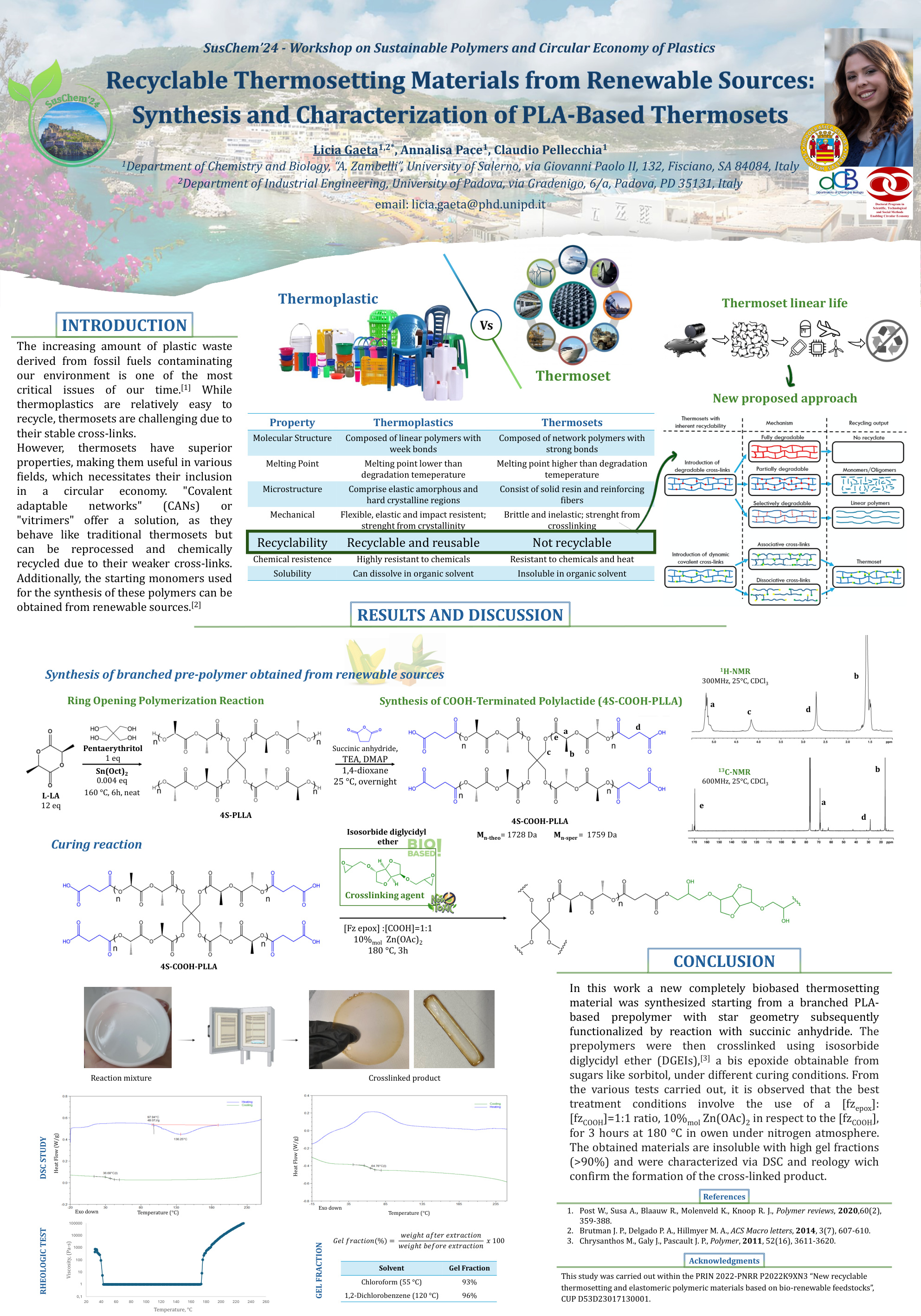
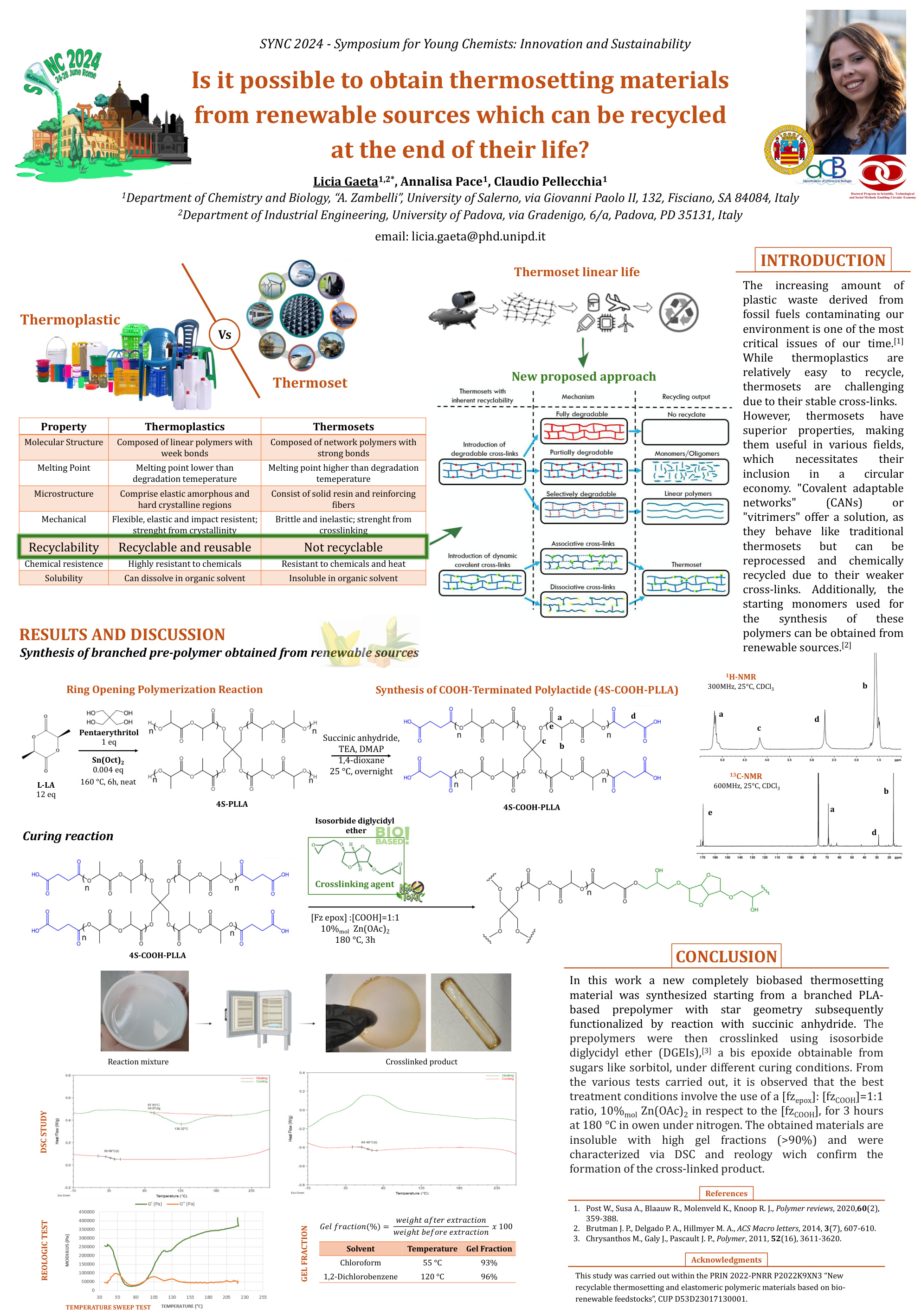
This project addresses the critical challenges of the ecological transition within the plastics sector, specifically focusing on cross-linked polymeric materials such as thermosetting resins and elastomers (rubbers). Due to their inherent chemical structure, these materials are typically infusible and insoluble, resulting in a current lack of sustainable end-of-life options. The strategic objective of the project is the development of a new generation of bio-based materials designed for the circular economy and chemical recycling (catalytic depolymerization), enabling the recovery of the original monomers at the end of their lifecycle.

Research and Development Lines

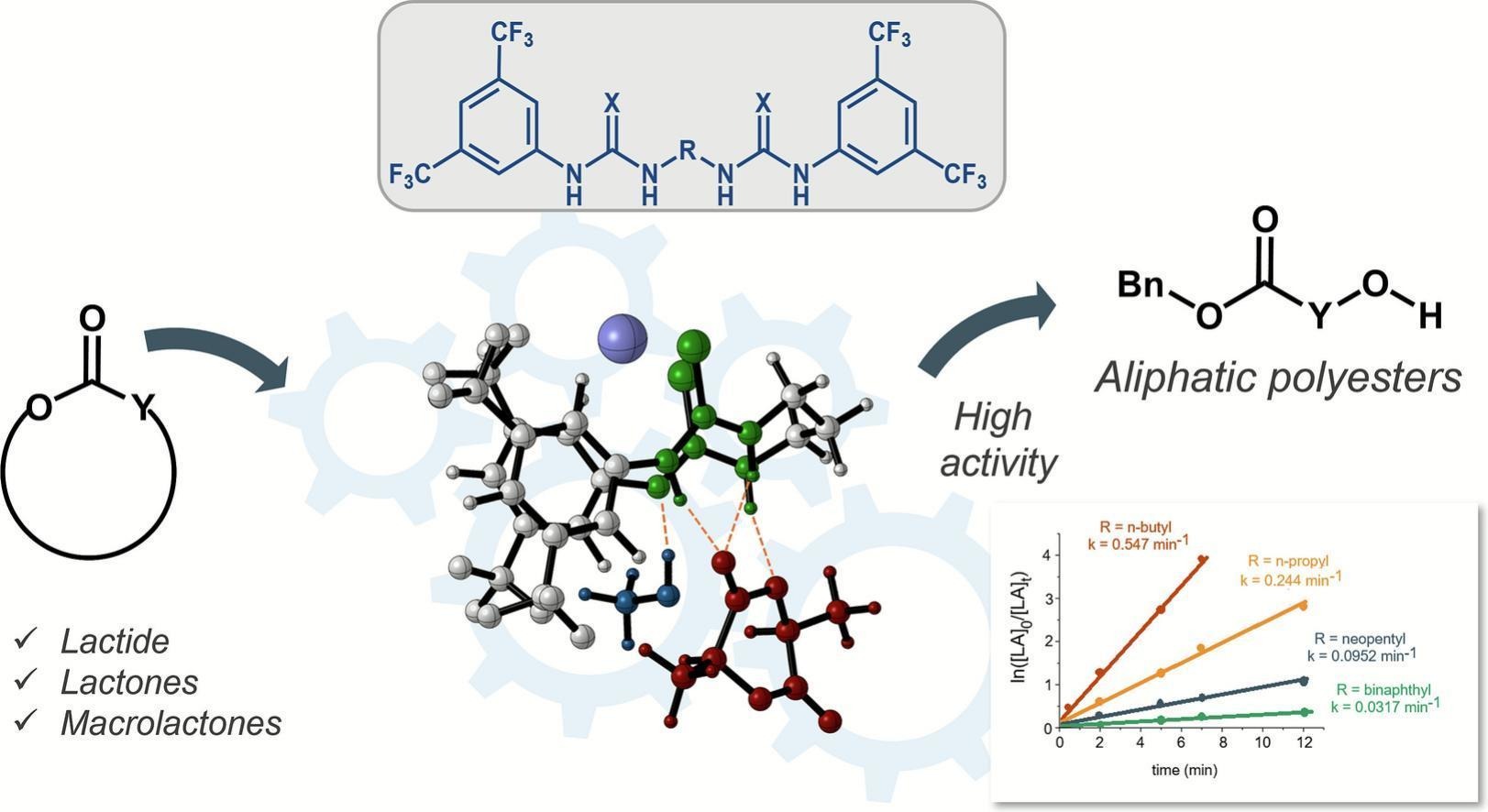
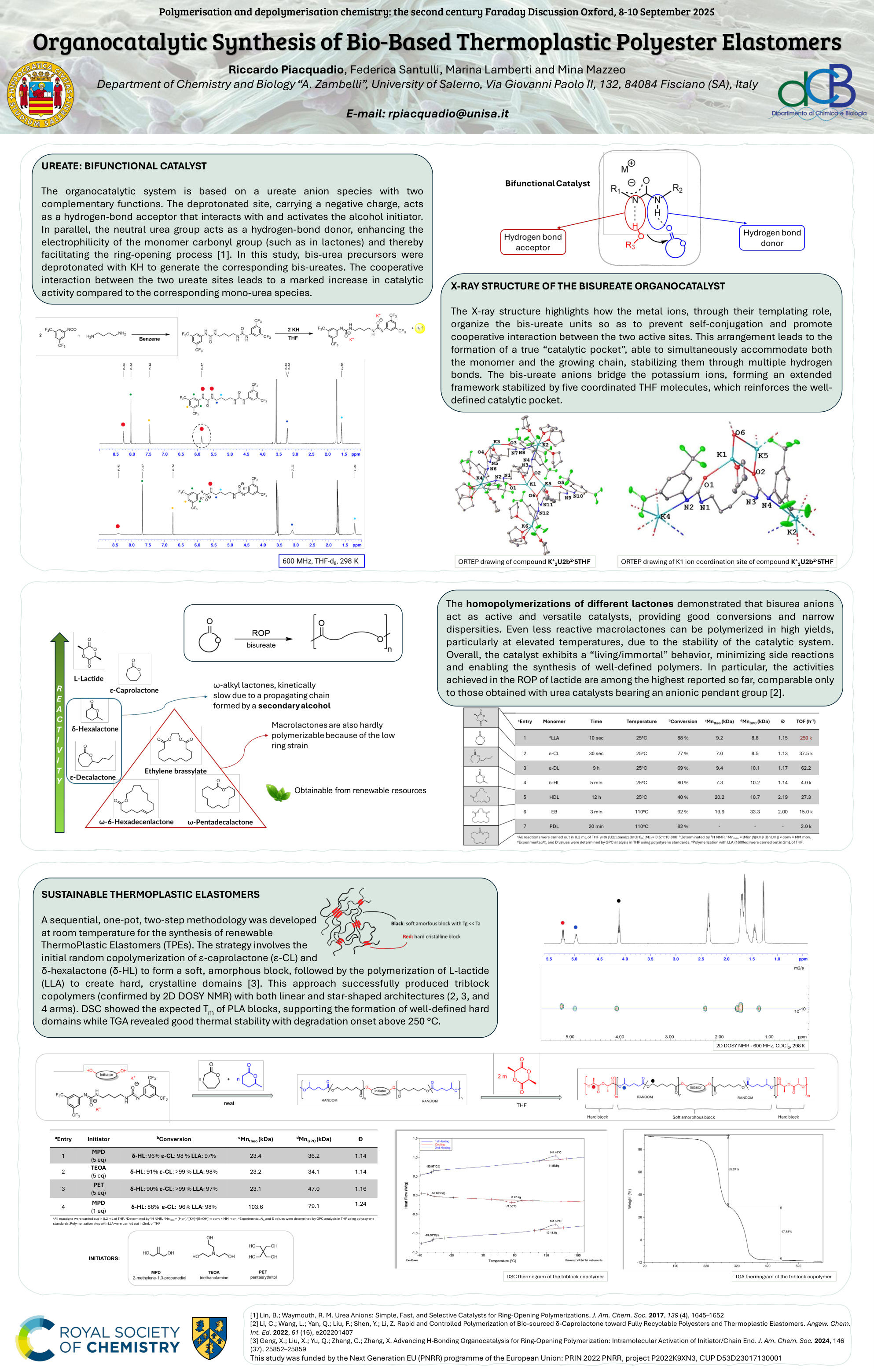
Scientific activities focus on the synthesis of innovative materials from renewable sources, with a particular emphasis on polylactic acid (PLA) and macrolactones. The core of the research involves the engineering of dynamic polymeric networks, such as vitrimeric systems and networks with reversible disulfide bonds. These chemical architectures allow the combination of high thermo-mechanical performance, typical of traditional materials, with the novel ability to be thermally reprocessed, repaired, and chemically recycled.

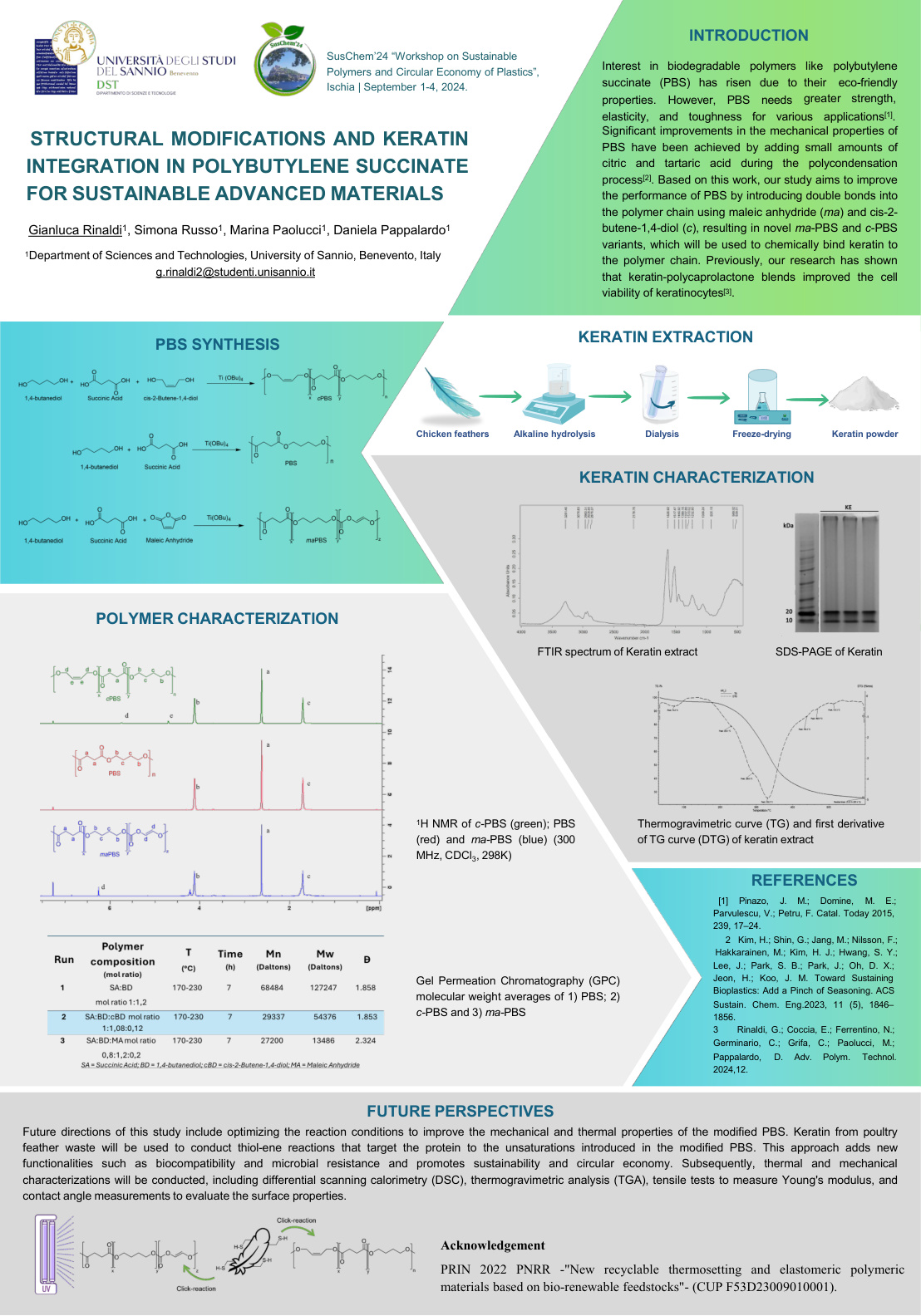
In parallel, the research extends to the development of high-performance eco-compatible composites ("green composites"). These materials are produced by integrating the new polymeric matrices with natural fibers and fillers derived from agricultural, industrial, and marine waste, including Posidonia oceanica, Ailanthus altissima, and keratin.

Main Scientific Objectives

  • Sustainable Synthesis: Development of thermosetting resins and elastomers based on degradable, bio-based aliphatic polyesters.
  • Thermoelastomer Design: Engineering of degradable ABA triblock copolymers capable of matching the performance of commercial rubbers while ensuring full recyclability.
  • Circular Economy: Validation of chemical recycling protocols to recover starting monomers, thereby eliminating the environmental impact of landfill disposal.
  • Waste Valorization: Production of reinforced polymeric composites through the recovery and high-value utilization of natural organic waste.

Consortium and Research Units

The project is implemented through the strategic synergy of three highly specialized Research Units:

  • University of Salerno (UNISA) - Coordinating Unit: Led by the Principal Investigator (PI), Prof. Claudio Pellecchia, with the participation of Prof. Mina Mazzeo. The unit coordinates the consortium's activities and leads the synthesis of PLA prepolymers, the development of vitrimeric thermosets, and the optimization of depolymerization processes.
  • University of Sannio (UNISANNIO): Led by Associated PI Prof. Daniela Pappalardo. This unit specializes in the synthesis of polyesters from renewable sources and focuses on the development of innovative elastomers with reversible polymeric networks.
  • University of Palermo (UNIPA): Led by Associated PI Prof. Roberto Scaffaro. The unit is responsible for the physico-chemical, rheological, and mechanical characterization of the synthesized materials, as well as the preparation, optimization, and degradation testing of composites reinforced with natural waste.
Back to projects